New York City
A Dog's JourneyNew York City is the urban setting for a stretch of Max and CJ’s life in which familiar routines, changing homes, and renewed friendships unfold amid crowded sidewalks and apartment buildings. The city is not presented through landmarks or an address; it takes shape through the sounds, smells, people, dogs, doors, and stairways that Max encounters. For him, its importance lies less in the city as a map than in the way CJ’s companionship makes its unfamiliar scale feel navigable—and, eventually, makes a smaller home worth preferring.
Street Life and Dog Walks
The city’s streets are busy enough to command Max’s attention. At first, outside noise is so loud that he notices it constantly, while the smells remain compelling; later, he grows accustomed to the roar. On an evening walk, cooling breezes push fallen leaves along the sidewalk, and the pair pass several blocks among people and dogs. Max stays alert in the crowd. These details make the urban setting a sensory environment experienced at ground level, through a dog’s hearing, nose, and vigilance.
Walking also gives Max a way to measure the people and animals around him. On one outing, CJ and the others go out without Sneakers. Max generalizes from his experience that cats walk by themselves, whereas dogs tend to walk beside people, a contrast that reflects his own attachment to CJ as much as his opinion of cats. He and Duke are both leashed, but Duke pulls toward competing smells, repeatedly yanking CJ off balance and getting in Max’s way. CJ has to call Duke’s name; Max, who trots close to her feet, takes pride in not needing the same correction. The street turns a routine walk into a small contest over who can stay beside CJ and protectively occupy her attention.
Apartment Buildings and Reunion with Trent
One evening, CJ takes Max out alone and leaves Duke behind after telling him to stay. The walk leads to a building entrance, where CJ works something on the wall, announces herself, and is admitted by a buzz. She carries Max up several flights to a door at the end of a hall. The sequence—sidewalk, entry buzzer, stairs, corridor—gives the city’s residential life a concrete form without identifying a neighborhood or address.
Trent opens the door, and Max recognizes him by smell. Inside, the apartment is strikingly empty: there is no furniture, and Max can race around without obstruction. Trent says that furnishings are on order and welcomes CJ warmly. As the two talk, Max explores the rooms and searches for Rocky, his brother, but finds no sign of him. Max concludes that Rocky must no longer be alive and wonders why Trent has no new dog. The bare rooms therefore register both as a space for movement and as a place marked, for Max, by the absent dog he expects to find.
Changing Routes and a Smaller Home
Later, CJ and Max continue their dog walks, but the route changes: they travel a long way to collect Katie, while Sally, Duke, and Beevis are no longer part of the usual group. Max specifically says that he does not miss Beevis. His response to Duke is more complicated. Although Duke’s pulling had irritated him, Max misses his large, goofy companion, who used to let Max lead their play. Together, the two dogs had made CJ feel protected, and Max remembers Duke as part of the family. Their absence from the walks makes the changing social world of the city visible through the dogs who no longer accompany them.
Rain and cold bring another intimate city detail into focus. When Max shivers on the way to Katie, CJ holds him until he is warm. On a later walk in cool wind, she puts a sweater on him. Max enjoys its snug warmth and takes pride in wearing something he interprets as evidence that CJ loves him more than Sneakers, who does not even have a collar. When CJ removes it, the sweater makes a ripping sound that Max associates with the end of a walk and the beginning of a nap. Weather, clothing, and routine turn the walk into a recurring measure of care.
Home, Proximity, and the City’s Meaning
Max does not understand why they do not return to their old home or why Duke no longer walks with them. He interprets these changes as part of how people govern their world: they may decide to live somewhere else and stop playing with particular dogs. The observation gives his account of the city a note of uncertainty. Human choices redraw his routes and relationships, even when he cannot know their reasons.
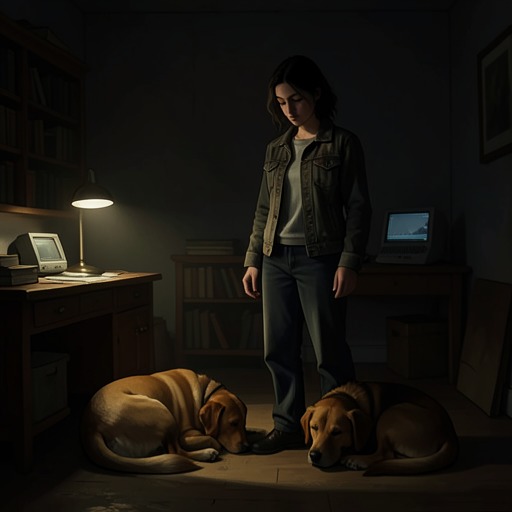
The new home is tiny. Besides the bed, its only piece of furniture is a lone stool, and CJ apologizes to Max for the lack of space. Yet she plays with him there, tossing a small ball across the kitchen while his nails scrabble on the slick floor. Max comes to prefer the new place to the old one because it lets him stay closer to CJ. When the ball sails onto the bed, he leaps after it, managing a jump he had not made before; Sneakers startles at his sudden arrival. The small room is not simply a reduction in space: through play and physical closeness, it becomes a home Max values. New York City’s narrative significance rests in that contrast between an expansive, noisy outside world and the intimate center CJ creates with him wherever they live.